Your Child's First Phone: A Guide for Jewish Parents
A child's first phone should do the few things the child really needs, and grow with them one step at a time. Start later than the class, with calls and texts, never open browsing. Agree on written rules before the phone arrives, check what your school accepts, and make sure someone other than the child holds the key.
The two fears every parent carries
When parents in our community talk about a child's first phone, they describe two fears at once, and they pull in opposite directions.
The first is that the phone will swallow the child. One mother on a community forum put it simply: "I want them to have zero access to social media and internet from the phone." A parent at a Long Island day school told Jewish Action: "The phones were becoming the focus of their lives; it was like an addiction among the girls." And a mother who had watched it happen with her own son warned another: "Whatever you give him now- there's no going back to life without it."
The second fear is that the child will be left out, or worse, will find a way around you. "If all of their friends have something that they can send pictures and your kids can't they will feel extremely left out," one parent wrote. Another mother reported that her son said "about a quarter of his high school grade has smartphones the yeshiva doesn't know about." A reader comment on a Chabad news site in August 2026 described the social side: "The camaraderie that used to happen among friends now happens on a WhatsApp chat and it's extremely socially isolating."
Both fears are reasonable. A good first phone answers both: it keeps out what would swallow the child, and it keeps in enough of real life that the child is not pushed to hide a second phone.
What the numbers say
The research on children and phones is large, and not all of it agrees. These are the findings we could confirm at their source, with the year of each.
| Finding | Figure | Source |
|---|---|---|
| Children with their own cellphone by age 8 | 1 in 4 | Common Sense Media, 2025 |
| Children with their own smartphone, by age | About 3 in 10 at 8 to 9, 7 in 10 at 12 to 13, 9 in 10 at 14 and older | Common Sense Media, 2021 |
| Teens 13 to 17 who have or can use a smartphone at home | 95% | Pew Research Center, 2024 |
| Teens who say they are online "almost constantly" | 4 in 10 | Pew Research Center, 2025 |
| Notifications a day on a teen's phone (median) | 237 | Common Sense Media, measured on the phones, 2022 data |
| Times a day a teen picks up the phone (median) | 51 | Common Sense Media, 2022 data |
| Teens who used their phones on school nights between midnight and 5 a.m. | 59% | Common Sense Media, 2022 data |
| Teens who say they spend too much time on their smartphone | 38% | Pew Research Center, 2023 |
| Teens who feel happy without their phone at least sometimes | 74% | Pew Research Center, 2023 |
| Teens who say a parent is distracted by their phone when they try to talk | 46% | Pew Research Center, 2023 |
What do the experts conclude? Carefully. The US Surgeon General's 2023 advisory said: "At this time, we do not yet have enough evidence to determine if social media is sufficiently safe for children and adolescents." In 2024, the social psychologist Jonathan Haidt proposed four new norms in his book The Anxious Generation: "No smartphones before high school ... No social media before 16 ... Phone-free schools ... More independence, free play, and responsibility." Some researchers dispute how much harm the evidence proves; a 2024 review in Nature is one of them. But much of the advice points the same way: later, less, and with more adults involved. Most American states now restrict phones in school: by July 2026, Education Week counted at least 39 states and the District of Columbia requiring schools to ban or restrict students' phones.
Look again at the last line of the table. Nearly half of teens say a parent is distracted by a phone when they try to talk. A child's first phone is also a question about ours.
Does your child need a phone at all?
"Do they need a cell phone?" one parent asked another, and then answered: "Why not just get a landline at this point?" It is the right first question. A phone should solve a real problem, and the usual problems (getting a child home, reaching a parent, a carpool change) can often be solved without one:
- A home phone for calls with friends and grandparents.
- A shared family phone that a child borrows for a trip or an activity and returns.
- A basic phone that calls and texts a short list of people.
When the child's life truly needs more (travel on their own, a job, a class group everyone depends on), that is the moment for a first phone with more on it, not before.
The step-up plan, age by age
The families who describe success almost all use the same idea: the phone grows with the child, one step at a time, and each step is earned. A plan agreed in advance turns every future argument into a conversation about the next step.
| Age | What the phone does | What stays out | What the child earns next |
|---|---|---|---|
| Under 10 | No phone of their own. A shared family phone for trips. | Everything else. | Showing they return the shared phone on time. |
| About 10 to 12 | Calls and texts to a list of people you agree on. | Internet, social media, app store, video. | Keeping the rules for a full school year. |
| About 12 to 13 | A few chosen apps: maps, the family group, a learning app. | Open browsing, social media, feeds, video platforms. | Responsibility with group chats. |
| About 14 to 16 | More apps as life needs them, with a clear way to ask for new ones. | Open browsing, social media, the time pull. | A level agreed together at 17. |
| 17 and up | A level agreed together, moving toward an adult phone. | What your home keeps out for everyone. | An adult's phone, with habits already formed. |
The ages are a starting point, not a rule. Some children are ready earlier and many later. What matters is that each step is agreed in advance, earned by keeping the last one, and can go back a step if it needs to.
What about a watch?
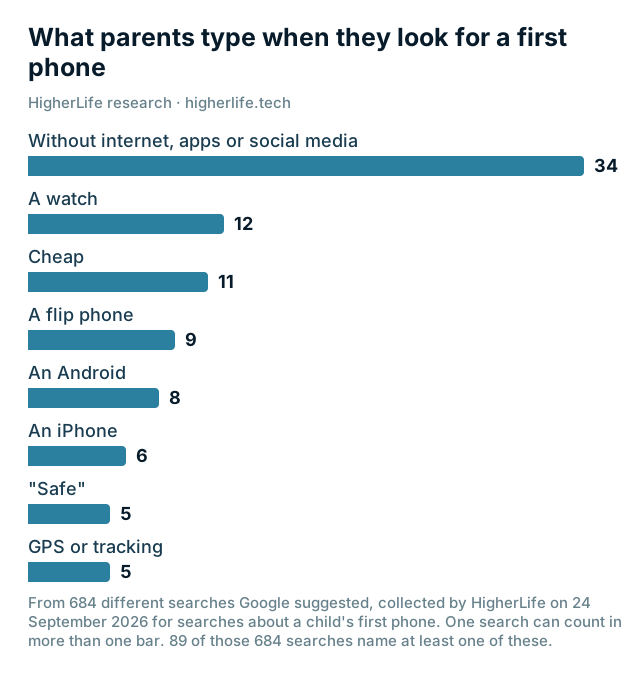
A watch was the second most common thing parents added to their first-phone searches in our research (the chart above). For a younger child, a watch that calls and texts can be the first step instead of a phone. On the Apple side, the facts are on Apple's own page:
- No iPhone needed for the child. Apple: "Set up any Apple Watch with cellular for your kids, even if they don't have their own iPhone." The parent does need one: "You'll also need an iPhone for the initial setup and to manage settings on their Apple Watch."
- It needs its own cellular plan. Apple: "Having a cellular plan is required to connect your kid's Apple Watch to a cellular network."
- School hours can be quiet. Apple's Schooltime "restricts notifications and disables the use of all apps on your child's Apple Watch," and parents can "choose approved contacts."
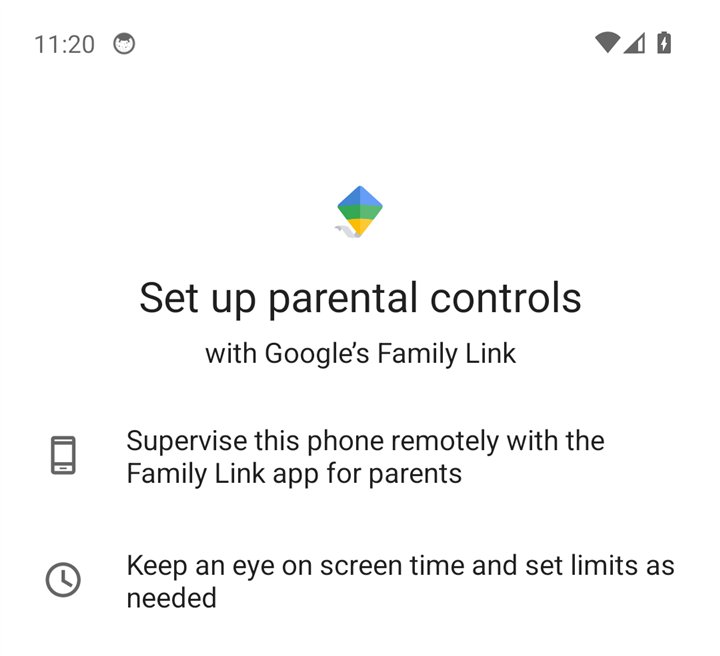
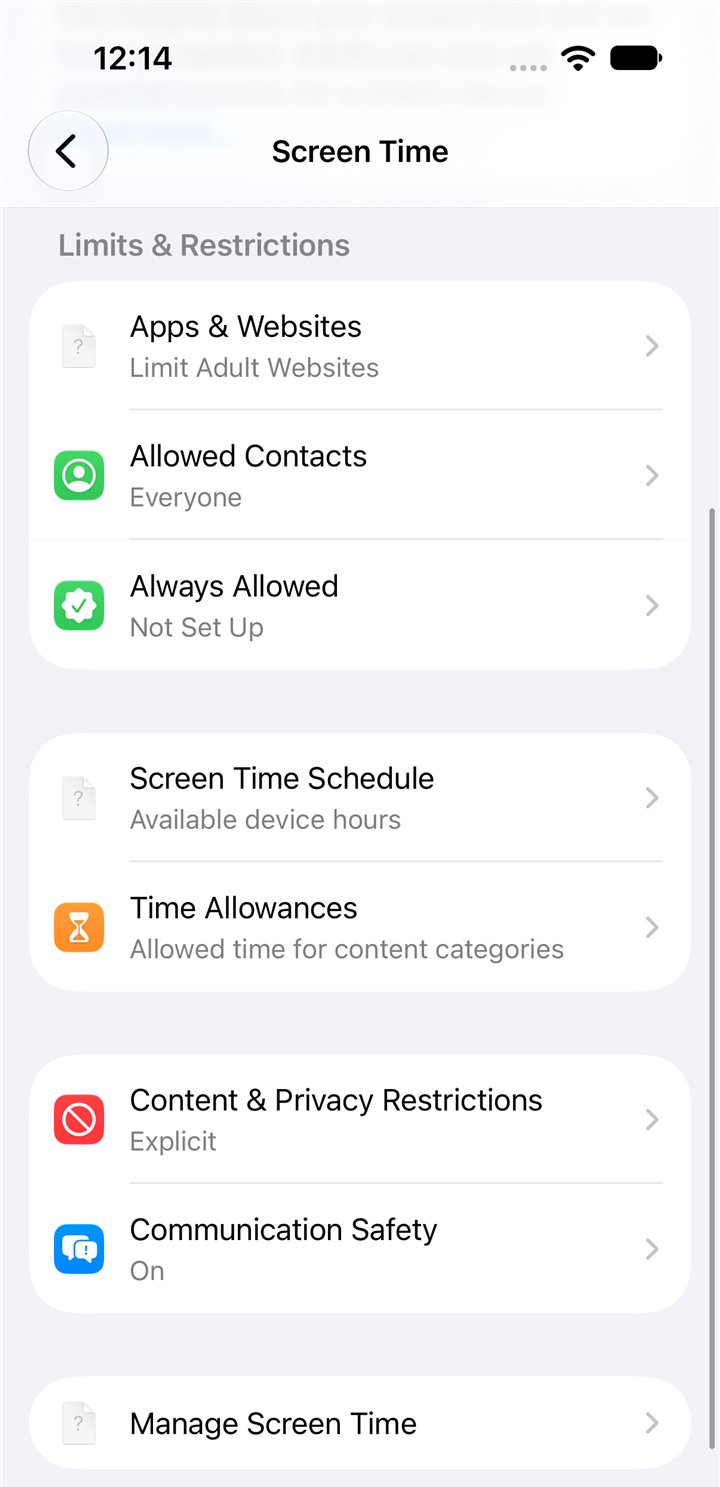
A watch still has a screen, so the same rules apply: agree what it is for, and ask your school whether it is allowed before you buy.
The bar mitzvah and bas mitzvah phone
In many families, the first real phone arrives around a bar or bas mitzvah, sometimes as a gift. That timing can be a blessing if you use it well:
- Frame it as responsibility, not as a prize. A bar mitzvah is the age of mitzvos. A phone that comes with clear responsibilities fits the moment better than a phone that comes with no rules.
- Talk to the giver first. If a grandparent or relative plans to give a phone, agree on which phone and how it will be set up before it is wrapped. It is much easier than taking a gift back.
- Set it up before it is opened. A phone that arrives already set to your family's level never has an "open" first week to take back.
- Sign the family agreement the same day. A new phone and new rules belong together.
The family phone agreement
Write the rules down, read them together, and both sign. A written agreement is not about distrust. It turns rules into a promise both sides made, and it gives you something to point to later instead of an argument. Adapt this one to your home.
Our family phone agreement
- This phone is for calls, texts and the apps we agreed on. New apps are asked for, not added.
- The phone sleeps outside my bedroom at night, on the charger in the kitchen.
- No phone at the table, at davening or during learning.
- On Shabbos and Yom Tov, the phone is put away with everyone else's.
- I answer calls and messages from my parents.
- If I see something I should not have seen, I tell a parent, and I will not be punished for telling.
- I do not send pictures of other people without asking them.
- I do not share my passcodes with friends.
- If I need a new app or a website, I ask, and I get an answer.
- My parents keep the same phone rules at home that they ask of me.
- We look at this agreement together every few months and decide the next step.
- If a rule is broken, we talk first. The phone may go back a step, and it can come forward again.
Signed: ______________________ (child) ______________________ (parent)
Rule 6 matters more than it looks. A child who fears punishment for telling will stop telling. A child who knows telling is safe becomes your best protection.
What your school accepts
For many families, the school decides. Yeshivos, day schools and seminaries each set their own phone rules, and they differ. In 2015, the village of Kiryas Joel tied yeshiva enrollment to parents' phone rules. In 2022, a group of Modern Orthodox yeshiva high schools committed together to "making our classrooms and most of our school days smartphone free." And since the 2025 to 2026 school year, New York public schools restrict smartphones for the whole day, while still allowing "simple cellphones without internet capability."
Before you buy anything, ask your child's school three questions: what kind of phone they accept, whether it may be used during the day, and what they need to see from you. Choose with their answer in hand.
"Everyone else has one"
Every parent hears it. Two things help.
First, it is usually not true. In one mother's experience, "'every kid has it' means 10% of the class." Ask for names. Talk to the other parents. Families who decide together, as a class, make it far easier for every child. The Wait Until 8th pledge is built on exactly that: it takes effect when ten families in the same grade sign.
Second, answer the need underneath. Usually the child is not asking for a smartphone. They are asking not to be left out of the group chat, the plans, the photos. If the family group and the class group can be on the first phone, much of the pressure goes away. One mother wrote that her son wanted "a fake phone cuz he says it's touch." Listen for what your child actually means.
When a rule is broken
It will happen, and how you respond decides what happens next.
- Stay calm and ask first. What happened, and why? Often there is a need you did not see.
- Go back one step, not to zero. Taking the phone away entirely teaches a child to hide the next one. Going back a step, with a clear way forward, teaches responsibility.
- Look at the setup, not only the child. If a setting was easy to change, the lesson is about the setting. Parents on community forums describe children getting around parental controls quickly. That is a reason for protection the child cannot switch off, not a reason to despair.
- Thank them for telling you, if they did.
Questions people ask
What age should a child get a first phone?
Later than the class, and only when there is a real need. Many families start with a shared family phone, then calls and texts around 10 to 12, adding a few chosen apps around the bar or bas mitzvah. The steps matter more than the exact age.
What is the best first phone for a child?
One that does the few things your child really needs, keeps out open browsing and social media, and can grow with them. It could be a basic phone or a protected iPhone, depending on what the child must keep and what the school accepts.
Should a 12-year-old have a smartphone?
Much of the advice says to wait: Jonathan Haidt's norms say no smartphones before high school, and the Wait Until 8th pledge asks parents to wait until the end of 8th grade. A phone with calls, texts and a few chosen apps is a different thing, and many families find it the right first step.
Should I give a phone as a bar mitzvah gift?
It can be a good moment, if the phone arrives already set to your family's level and the family agreement is signed the same day. Talk to any relative who plans to give one before they buy it.
How do I stop my child from getting around the settings?
Settings the child can change will be changed. Choose protection that someone other than the child controls, keep the rules few and clear, and make it safe for your child to tell you when something goes wrong.
What if all their friends have smartphones?
Usually far fewer do than your child says. Talk with the other parents, and consider deciding as a class. Then answer the real need underneath, usually the group chat and the plans, on the first phone itself.
Should my child's phone have WhatsApp?
Decide before the first class group invites them. Many families allow the family group and the class group at first and add more later. Our app-by-app guide explains WhatsApp's parts.
Where should the phone be at night?
Outside the bedroom. In a 2023 study that measured teens' phones directly, 59% used them on school nights between midnight and 5 a.m. A charger in the kitchen solves that for everyone, parents included.
Sources
- Common Sense Media, The 2025 Common Sense Census: Media Use by Kids Zero to Eight (February 26, 2025).
- Common Sense Media, The Common Sense Census: Media Use by Tweens and Teens, 2021.
- Common Sense Media, Constant Companion: A Week in the Life of a Young Person's Smartphone Use (2023).
- Pew Research Center, Teens, Social Media and Technology 2024 (December 12, 2024).
- Pew Research Center, Teens, Social Media and AI Chatbots 2025 (December 9, 2025).
- Pew Research Center, How Teens and Parents Approach Screen Time (March 11, 2024).
- U.S. Surgeon General, Social Media and Youth Mental Health (May 23, 2023).
- The Anxious Generation, The Four New Norms (2024).
- Wait Until 8th, the pledge (accessed September 24, 2026).
- Jewish Action, Taking Back our Schools, and Childhood by Barbara Bensoussan (Spring 2025).
- The Jewish Link, Yeshiva high schools' mobile phone policy (September 2022).
- JTA, Hasidic village makes parents choose (August 5, 2015).
- Education Week, Which states ban or restrict cellphones in schools? (updated July 28, 2026).
- Office of the Governor of New York, Distraction-free schools (May 6, 2025).
- Imamother forum, Phone for kids (March 2022), Phones the yeshiva doesn't know about (September 2022) and Kosher phone Monsey (August 2025).
- Odgers, review of The Anxious Generation, Nature (March 29, 2024).
- Anash.org, The Smartphone Question We Can't Afford to Ignore, reader comment (August 19, 2026).
- Apple, Apple Watch For Your Kids: set-up without the child's own iPhone, the cellular plan, Schooltime and approved contacts.
- HigherLife research: 684 different searches Google suggested for searches about a child's first phone, collected on 24 September 2026, and 319 questions and comments from 96 community forum and news pages, 2010 to 2026, read in September 2026.