Smartphone Addiction in 2026: The Numbers, the Signs, and What Actually Helps
Most of us check our phones far more than we mean to. In a 2023 study that measured teens' own phones, they got a median of 237 notifications and 51 pickups a day. What helps most is changing the phone and the room, not willpower: notifications off, the phone out of the bedroom, the pull taken off the home screen, and one real break each week. For many Jewish families, that break already exists. It is called Shabbos.
A word about the word "addiction"
Researchers argue about whether "addiction" is the right word for how people use their phones, and this guide is not a medical diagnosis. We use the word the way people do in everyday speech, and the way one woman did when she started a forum thread in April 2023 with five words: "Im addicted. I said it."
She was not describing anything dramatic. She was describing what most of us know: picking up the phone for one thing and staying for something else, telling a child "one minute" while reading a screen, the evening that disappears. The good news is that the same research that explains why it happens also shows what helps.
The latest numbers, checked in 2026
These are the figures we could confirm at their source. Each carries its year, because this research moves quickly and older numbers get repeated long after they are out of date.
| Finding | Figure | Source, year of data |
|---|---|---|
| Adults | ||
| US adults who own a smartphone | 91% | Pew Research Center, 2025 |
| US adults who say they go online "almost constantly" | 31% (44% of ages 18 to 49) | Pew Research Center, 2021 |
| Parents of teens who say they spend too much time on their smartphone | 47% | Pew Research Center, 2023 |
| Times a day US adults say they check their phones | 186 (self-reported, commercial poll) | Reviews.org, 2025 |
| Teens | ||
| Teens who say they are online "almost constantly" | 4 in 10 | Pew Research Center, 2025 |
| Teens who use at least one major social platform almost constantly | 36% | Pew Research Center, 2025 |
| Hours a day the average teen spends on seven social platforms | 4.8 | Gallup, 2023 |
| Notifications a day for young people aged 11 to 17 (median, measured on the phone) | 237 | Common Sense Media, 2022 data |
| Times a day a teen picks up the phone (median, measured) | 51 | Common Sense Media, 2022 data |
| Teens who used their phones on school nights between midnight and 5 a.m. | 59% | Common Sense Media, 2022 data |
| Teens who say they spend too much time on their smartphone | 38% | Pew Research Center, 2023 |
| Teens who feel happy without their phone, at least sometimes | 74% (72% peaceful; 44% anxious) | Pew Research Center, 2023 |
| Teens who say a parent is distracted by their phone when they try to talk | 46% | Pew Research Center, 2023 |
Two things stand out. The measured numbers (237 notifications, 51 pickups) come from software on real phones, not from people's guesses, which makes them more trustworthy than the dramatic "times a day" figures that circulate online. And the last line of the table is about adults: nearly half of teens say a parent is distracted by a phone when they try to talk.
What the research says, and what it does not
The research on phones is large and not all of it agrees. Here is what is well supported, stated as carefully as the studies allow.
- Notifications cost attention even when you ignore them. A 2015 study found that "cellular phone notifications alone significantly disrupted performance on an attention-demanding task, even when participants did not directly interact with a mobile device during the task."
- A phone in sight may cost some focus. In a well-known 2017 set of experiments, people whose phones were in another room "significantly outperformed those with their phones on the desk." Later reviews found a smaller effect, mainly on working memory, so the honest summary is that studies suggest it matters, less than first claimed.
- A phone on the table changes the conversation. In two experiments, the mere presence of a phone could have "negative effects on closeness, connection, and conversation quality." In a study of more than 300 people at meals, having phones on the table made people more distracted, and they enjoyed the time with friends and family less.
- Screens before bed can affect sleep. In a laboratory study, people reading on a light-emitting screen before bed "took longer to fall asleep" and had "reduced next-morning alertness" compared with a printed book.
- For teens, experts urge caution. The US Surgeon General's 2023 advisory said: "At this time, we do not yet have enough evidence to determine if social media is sufficiently safe for children and adolescents," and cited a study finding that adolescents on social media more than three hours a day faced double the risk of symptoms of depression and anxiety.
What the research does not settle: whether phones caused the rise in teen anxiety. Jonathan Haidt's 2024 book The Anxious Generation argues that they did, and a review of the book in Nature argued that its central claim "is not supported by science." You do not need to settle that argument to act. The findings above are enough: fewer interruptions, a phone out of sight while you work and talk, and no screen in bed.
The two-minute self-check
This is not a test and it has no score. It is a mirror. Answer honestly, for yourself, not for your children.
Ten questions
- Is the phone the first thing I look at in the morning and the last thing at night?
- Do I pick it up without a reason, and only then look for one?
- Do I open it for one thing and find myself somewhere else ten minutes later?
- Do I check it during davening, learning or meals?
- Have I told a child "one minute" while looking at a screen this week?
- Do I feel uneasy when I cannot find it?
- Do I sleep with it within reach?
- Has someone I love asked me to put it down?
- Do I use it to avoid being bored, or to avoid a feeling?
- Would I be embarrassed if my Screen Time report were read aloud at the table?
If several of these made you wince, you are in large company. One woman described it exactly: "I'm addicted to my smartphone. It's the first thing I look at in the morning and the last thing I check before bed." Her answer, as we will see below, was Shabbos.
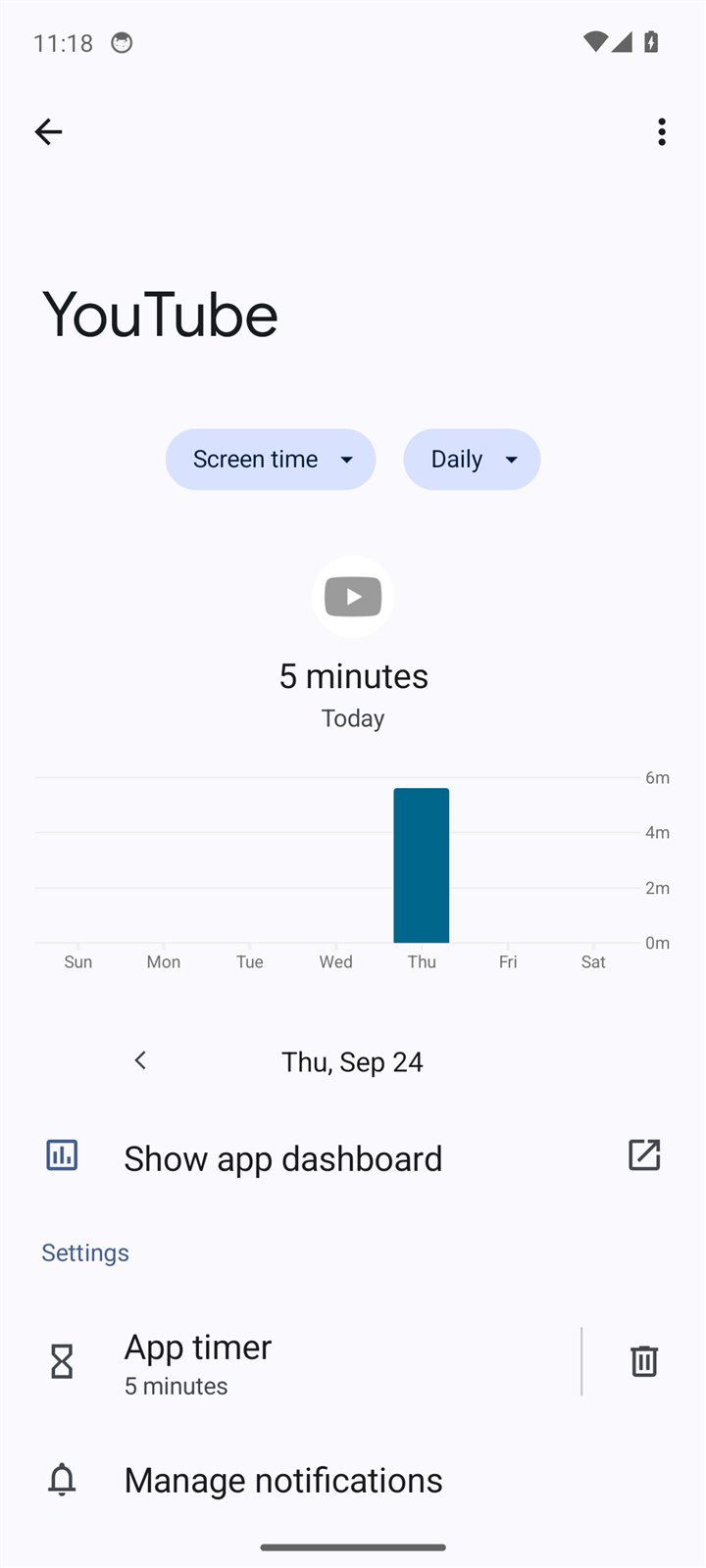
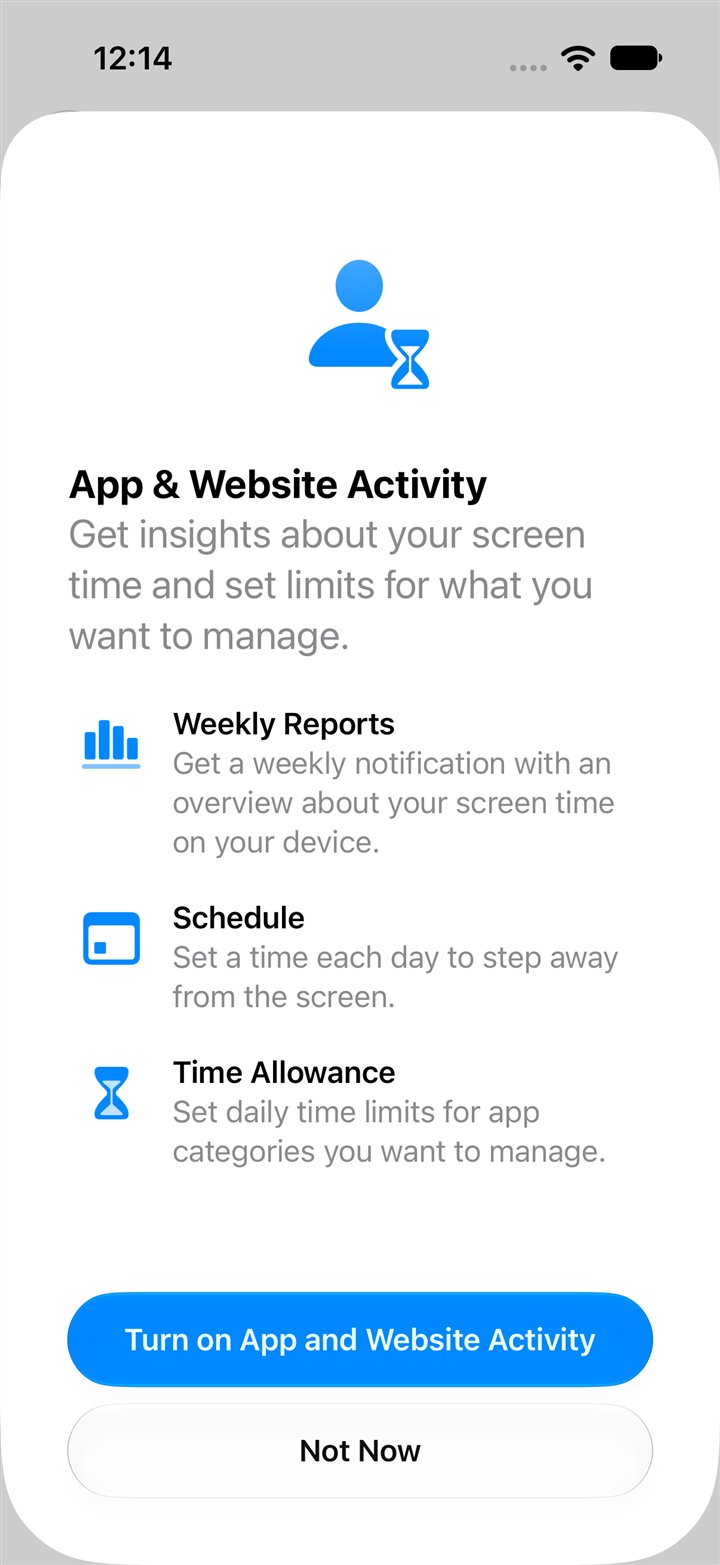
To see your real numbers on an iPhone, open Screen Time: Apple lets you "view a report of your Pickups and Notifications to see how many times you picked up your devices and how many notifications you received." On Android, Digital Wellbeing shows the same.
When it is more than a habit
If phone use comes with anxiety, low mood, or trouble at school, at work or at home that does not lift, talk to your doctor or a licensed therapist. In the United States, SAMHSA's National Helpline is "a free, confidential, 24/7, 365-day-a-year treatment referral and information service" for "individuals and families facing mental and/or substance use disorders": 1-800-662-HELP (4357).
Why it is so hard to put down
It is not a failure of character. A smartphone combines several things that each pull on attention: a stream of notifications, feeds that never end, messages that show when you have read them, and something new every time you look. One reader on a Jewish community forum described the pressure of read receipts on WhatsApp: "you feel pressure to reply immediately." Willpower against all of that at once, every day, is a losing fight for most people.
That is why the strategies that work change the phone and the room instead of relying on willpower.
What actually helps, from easiest to strongest
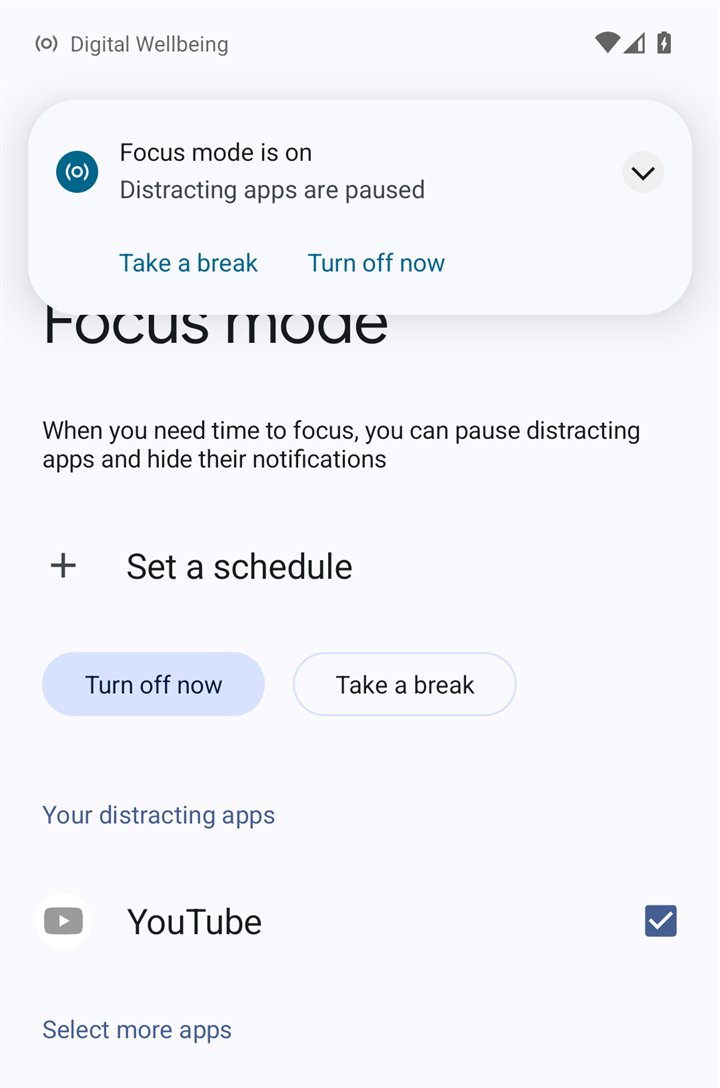
- Turn off notifications, except from people. Keep calls and messages from family. Turn off everything else: news, shopping, games, social apps. It is the single cheapest change, and the research on notifications suggests it gives back real attention.
- Change the room. The phone sleeps in the kitchen, on the charger, for everyone in the house. It stays off the table at meals, and out of sight while you work or learn.
- Take the pull off the phone. Delete the apps with endless feeds. Move what is left off the first screen. Turn on grayscale (search "grayscale" in Settings). If the browser is where your time goes, take it away. As one woman put it: "My main addiction is the browser."
- Let someone else hold the key. Apple's iOS 26 guide says that "by default, Screen Time limits can be ignored once reached," and a passcode you set for yourself can be reset with your own account. Limits hold when someone else keeps the passcode, or when the phone is set up and kept by a service.
- Take one full break every week. Not an app. A day.
Turning your iPhone into a simpler phone
Many people who want out of the scroll do not want to give up their iPhone's camera, maps or WhatsApp. They want the phone to do its job and nothing more. You can move a long way toward that yourself:
- One home screen. Keep four to eight apps you truly need. Everything else goes to the App Library.
- Remove the feeds. Delete the social and video apps. If you need one occasionally, use it on a computer.
- Grayscale. Search "grayscale" in Settings. Many people find a gray screen far less inviting.
- Apple's simplest mode. Apple's Assistive Access, designed for people who need a simpler iPhone, turns the phone into a few large buttons (calls, messages, camera, photos, music and apps you choose), and leaving it needs a passcode. It was built for people with cognitive disabilities, but it shows how simple an iPhone can be.
- Protect the change. Every one of these can be undone in a minute by the person holding the phone. That is the honest limit of doing it yourself.
Shabbos: the break that already works
For about 25 hours every week, from before sunset on Friday to after nightfall on Saturday, observant Jewish families put their phones away. Long before anyone wrote about "digital detox," Shabbos was giving families a full day of meals without screens, conversations without interruptions and sleep without a glowing rectangle beside the bed.
People who take it up describe the difference plainly. The writer who called herself addicted to her smartphone wrote about learning to put it away on Shabbat. A reader of that article added: "I bought a kosher phone and since then I'm not using my phone anymore on Shabbat." And teenagers feel it too: in a 2023 Pew survey, 74% of teens said being without their phone makes them feel happy at least sometimes, and 72% said peaceful.
A few things families say make Shabbos work with phones in the house:
- One rule for everyone. A mother asking how to take a teenager's phone for Shabbos was told: "If the same rule is for everyone including you and your husband, I think you can pull this off."
- A place for the phones. A basket or a drawer, filled before candle lighting, emptied after Havdalah.
- Carry the feeling into the week. Families who love their Shabbos often start one weekday meal the same way.
A young man named Noah, who had to use a kosher phone while learning at the Mir in Jerusalem and came to find it freeing, put the whole idea in one sentence to 18Forty: "I don't want to be a slave to this."
A seven-day reset
If you want to start today, do one thing each day. By the end of the week, the phone will already feel different.
| Day | Do this | Why |
|---|---|---|
| 1 | Look at your Screen Time report: pickups, notifications, hours. | You cannot change what you have not measured. |
| 2 | Turn off every notification that is not from a person. | Notifications cost attention even when ignored. |
| 3 | The phone sleeps in the kitchen. Buy an alarm clock if you need one. | Screens in bed cost sleep. |
| 4 | Rebuild the home screen: one page, only what you need. | Out of sight is out of reach. |
| 5 | Delete one app with an endless feed. | Take the pull off the phone. |
| 6 | Hold one meal with every phone in another room. | Phones on the table make time together less enjoyable. |
| 7 | Keep Shabbos with the phone put away, or take one full day off. | The break that already works. |
For children and teenagers, the same ideas apply with a parent's help. Our guide to a child's first phone has a family agreement you can print.
Questions people ask
Is smartphone addiction real?
Researchers disagree about whether "addiction" is the right medical word, but the behavior is real and measurable: teens whose phones were tracked picked them up a median of 51 times a day and received 237 notifications. Most people use the word to mean a habit they would like to break.
How many times a day do people check their phones?
The most reliable measured figure we found is for teens: a median of 51 pickups a day, recorded by software on their phones. Figures for adults, such as 186 a day, come from self-reported polls and should be read as rough.
How much screen time is too much?
There is no single number. A better test is what the time replaces: sleep, meals, conversation, learning. For teens, the Surgeon General's advisory noted a study linking more than three hours a day of social media with double the risk of symptoms of depression and anxiety.
What are the signs of phone addiction?
Reaching for the phone first thing and last thing, picking it up without a reason, losing time you meant to spend elsewhere, feeling uneasy without it, and people you love asking you to put it down. The ten-question self-check above covers the common ones.
How do I stop being addicted to my phone?
Change the phone and the room rather than relying on willpower: turn off notifications except from people, keep the phone out of the bedroom, remove the apps with endless feeds, let someone else hold the key to your limits, and take one full break every week.
Will a kosher phone cure phone addiction?
It helps by removing the strongest pulls, but it is not the whole answer. As one woman wrote: "I know ppl who are addicted to their KOSHER phones as well." The habits around the phone matter as much as the phone.
How do I make my iPhone a dumb phone?
Keep one home screen with only essential apps, delete the feeds, turn on grayscale, and consider Apple's Assistive Access for the simplest layout. To make the change hold, let someone else keep the passcode, or have the phone set up and kept by a service.
Can you use your phone on Shabbat?
Observant Jews do not use phones on Shabbat and Yom Tov. When a life may be at risk, you call for help; for any other case, ask your rav. Many who do not keep every detail of Shabbat still choose a phone-free day each week for the same reasons this guide describes.
Sources
- SAMHSA, National Helpline: "a free, confidential, 24/7, 365-day-a-year treatment referral and information service," 1-800-662-HELP (4357).
- Pew Research Center, Mobile Fact Sheet (November 20, 2025).
- Pew Research Center, About three-in-ten U.S. adults say they are almost constantly online (March 26, 2021).
- Pew Research Center, How Teens and Parents Approach Screen Time (March 11, 2024).
- Pew Research Center, Teens, Social Media and AI Chatbots 2025 (December 9, 2025).
- Gallup, Teens spend average of 4.8 hours on social media per day (October 13, 2023).
- Common Sense Media, Constant Companion: A Week in the Life of a Young Person's Smartphone Use (2023).
- Reviews.org, Cell Phone Usage Stats 2026 (January 1, 2026): self-reported online poll.
- Stothart, Mitchum and Yehnert, The attentional cost of receiving a cell phone notification, Journal of Experimental Psychology (2015).
- University of Texas at Austin, The mere presence of your smartphone reduces brain power (June 26, 2017), and Parry, a 2023 meta-analysis in Media Psychology.
- Przybylski and Weinstein, Can you connect with me now?, Journal of Social and Personal Relationships (2013).
- Dwyer, Kushlev and Dunn, Smartphone use undermines enjoyment of face-to-face social interactions, Journal of Experimental Social Psychology (2018).
- Chang, Aeschbach, Duffy and Czeisler, Evening use of light-emitting eReaders, PNAS (2015).
- U.S. Surgeon General, Social Media and Youth Mental Health (May 23, 2023).
- Odgers, review of The Anxious Generation, Nature (March 29, 2024).
- Apple, Set schedules with Screen Time (iPhone User Guide, iOS 26).
- Yeshiva World News Coffee Room, What's Wrong with WhatsApp? (May 2016; archived copy, the Coffee Room is no longer online).
- Apple, Set up Screen Time for yourself on iPhone (iOS 27), and About Assistive Access.
- Chabad.org, How I Learned to Put My Phone Away on Shabbat by Kylie Ora Lobell, and reader comments.
- 18Forty, What Haredim Can Teach Us About Getting Off Our Smartphones by Emily Goldberg (August 7, 2025).
- Imamother forum, Inspire me with your kosher phone (April 2023) and How to tactfully ask teen for her phone for Shabbos (April 2023).